Reservoir Books
Mary Astell & John Norris – Letters Concerning the Love of God – Third Edition, 1730
Mary Astell & John Norris – Letters Concerning the Love of God – Third Edition, 1730
Couldn't load pickup availability
ASTELL, Mary (1666–1731) & NORRIS, John (1657–1711). Letters Concerning the Love of God, Between the Author of the Proposal to the Ladies and Mr. John Norris: Wherein his late Discourse, shewing, That it ought to be intire and exclusive of all other Loves, is further Cleared and Justified. The Third Edition, Corrected by the Authors, with some few Things added. London: Printed for Edmund Parker, at the Bible and Crown over against the New Church in Lombard-Street, 1730.
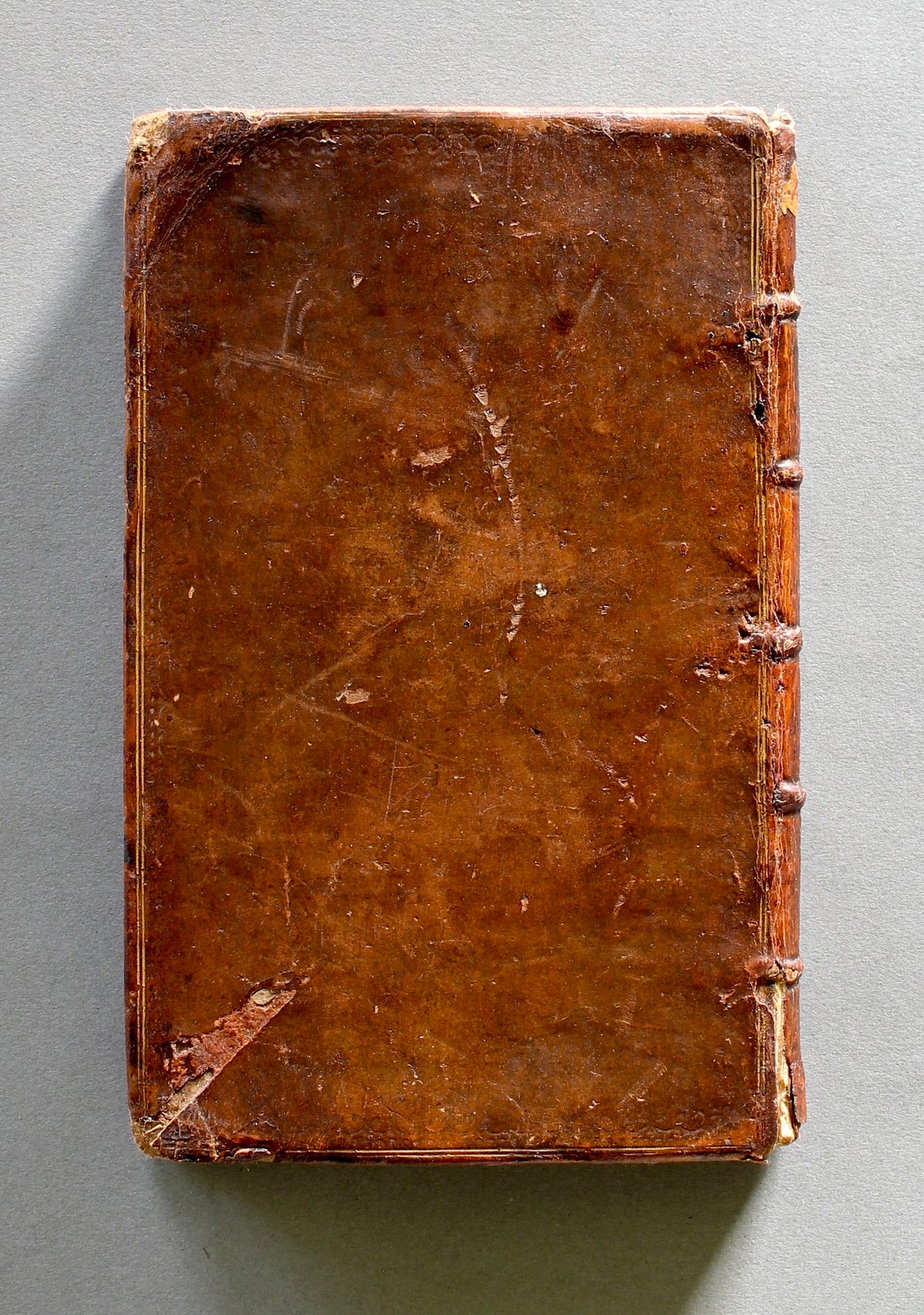
Octavo. Contemporary brown calf, boards ruled in gilt, spine with raised bands. [38], 200 pp., with eight pages of publisher’s advertisements at the rear. Wanting the initial advertisement leaf called for by ESTC (T76775), otherwise complete.
The third edition of the important philosophical correspondence between Mary Astell, one of the foremost women philosophers of early modern England, and the English philosopher and theologian John Norris of Bemerton.
Astell’s name does not appear on the title page: she is identified instead as “the Author of the Proposal to the Ladies,” a deliberate reference to her influential A Serious Proposal to the Ladies. The correspondence began in 1693, when Astell approached Norris with objections to arguments developed in his Practical Discourses. Their exchange became a substantial philosophical discussion of the nature of love, the relationship between God and created beings, causation, moral agency, friendship and the proper relationship between reason and religious belief.
Astell begins the correspondence with a pointed defence of women’s intellectual capacity, remarking that some “morose Gentlemen” might prefer to confine her to the “Distatff or the Kitchin” or “the Glass and the Needle”, before proceeding to engage Norris on equal philosophical terms. The passage neatly anticipates the concerns that run through her wider writings on women’s education and rational agency.
The book is closely connected with Astell’s wider intellectual project. Her A Serious Proposal to the Ladies had argued forcefully for women’s intellectual and spiritual education; in the present correspondence the anonymous “Author of the Proposal” is seen actively engaging a prominent male philosopher on metaphysics and theology rather than simply advocating women’s capacity to do so. The volume is dedicated to Lady Catherine Jones, an important member of Astell’s circle.
The work first appeared in 1695, followed by a second edition in 1705 and this third edition in 1730. The 1730 edition appeared near the end of Astell’s life and is described on the title page as “Corrected by the Authors, with some few Things added.” It represents the third and last eighteenth-century edition of the work recorded before Astell’s death in 1731.
Condition
Contemporary calf, rubbed and marked, with wear to the board edges and corners. Significant losses of leather at the head and foot of the spine, exposing portions of the underlying structure, with further rubbing and wear along the joints; both boards nevertheless remain attached. The original raised-band spine survives without later restoration.
Internally considerably better preserved: the text generally clean, crisp and well-margined, with light age-toning, occasional minor marks and some corner creasing. Some staining and old numerical annotations to the endpapers. Title page clean and strongly printed.
Upper blank margin of the title page neatly excised, without loss of printed text or border.
Wanting the single initial advertisement leaf called for by ESTC, accounting for the present [38] rather than [40] unnumbered pages; otherwise complete. The eight-page publisher’s catalogue at the rear is present.
An appealing unrestored copy in its contemporary binding of an important work by Mary Astell, with particular relevance to the history of philosophy, women’s intellectual history and early eighteenth-century religious thought.
Bibliographical Reference
ESTC T76775
Share